

Recovering from ACL reconstruction surgery involves much more than allowing the ligament to heal. One of the most important goals of physical therapy after ACL surgery is rebuilding the strength and function of the quadriceps.
The quadriceps muscle plays a major role in walking, climbing stairs, running, jumping, landing, and controlling the knee. Unfortunately, significant quadriceps weakness is common after ACL reconstruction, making targeted strengthening an important part of rehabilitation.
One tool physical therapists can use throughout the rehabilitation process is isometric exercise.
What Are Isometric Exercises?
An isometric exercise involves contracting a muscle without creating movement at the joint.
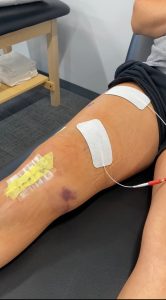
A simple example after ACL surgery is a quadriceps set, where you tighten the muscles on the front of your thigh while keeping your knee still. We often incorporate electrical stimulation with this exercise immediately following surgery to get the quad going.
As rehabilitation progresses, isometric exercises can become more challenging. Examples may include:
- Wall-sit holds
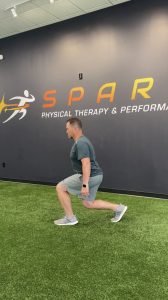
- Split-squat holds
- Loaded squat holds
- Knee-extension isometrics
- Single-leg isometric exercises
The amount of resistance, knee position, duration, and effort can all be adjusted to progressively challenge the quadriceps based on patient comfort and capacity.
This makes isometrics a versatile tool that can be used from the early stages of ACL rehabilitation through more advanced strength training. Preventing quadriceps atrophy and avoiding quad shutdown, often referred to as arthrogenic muscle inhibition (AMI), is critical for a successful rehab.
Why Is Quadriceps Strength Important After ACL Surgery?
Quadriceps weakness is one of the most common problems following ACL reconstruction.
Pain, swelling, reduced activity, and changes in the nervous system can make it difficult to fully activate the quadriceps after surgery. If this weakness persists, it can affect walking mechanics, stair climbing, running, jumping, and the ability to safely absorb force.
Current ACL rehabilitation guidelines emphasize restoring quadriceps strength and progressively increasing the amount of load placed on the leg as the knee recovers.
The goal isn’t simply to get the quadriceps “working” again. The goal is to progressively restore its ability to produce and control force. The quadriceps is the knees braking system – restoring full strength is essential for athletes looking to plant, cut and stop effectively.
How Isometric Exercises Can Help
strength training or demanding dynamic exercises.
For example, an early-stage patient may begin with simple quadriceps contractions. As strength and knee tolerance improve, the exercise can progress to longer holds or higher levels of resistance.
Eventually, isometrics can be performed at more challenging joint positions and with substantial external resistance. This creates a progression from:
Muscle activation → strength → endurance → high-force production → dynamic movement
Note: isometrics should not replace progressive resistance training. Instead, they are one tool within a larger ACL rehabilitation program.
Isometrics and Tendon Health
The quadriceps is part of a larger muscle-tendon system that helps extend and stabilize the knee.
Tendons respond to mechanical loading. Research published in recent years has demonstrated that progressive resistance training can increase tendon stiffness and improve other properties related to the tendon’s ability to tolerate and transmit force.
This is one reason progressive loading is important following ACL reconstruction.
However, it is important to make a distinction: isometric exercise has not been proven to directly strengthen or accelerate healing of the reconstructed ACL graft.
Instead, progressive loading helps restore the capacity of the muscles and tendons surrounding the knee so they can tolerate increasing physical demands. For patients having a bone-tendon-bone or quadriceps tendon graft, building up toluene to tendon loading is an essential piece of the early rehab process.
What Does New Research Tell Us?
A 2025 randomized clinical trial by Patra and colleagues investigated the effects of isoinertial, or flywheel, training in people recovering from ACL reconstruction.
The study included 96 participants between 18 and 45 years old who were three weeks post-ACL reconstruction. Participants either completed conventional rehabilitation or conventional rehabilitation combined with flywheel training twice per week for six weeks.
Flywheel training is different from a traditional isometric exercise. Instead of holding a muscle contraction without movement, flywheel training involves dynamic resistance and places a substantial demand on the muscles during both the lifting and lowering portions of an exercise.
After six weeks, both groups demonstrated improvements in several measures of physical function.
The flywheel-training group demonstrated a significantly greater improvement in eccentric muscle power compared with conventional rehabilitation alone. The researchers also found an improvement in muscular endurance in the flywheel group. However, there were no significant between-group differences in isometric strength, balance, or concentric power.
These findings are important because they demonstrate that progressive rehabilitation can improve multiple aspects of muscle function after ACL reconstruction, and that adding a specific type of resistance training may provide additional benefits for eccentric power and endurance.
The study did not investigate static isometric training, so its findings should not be interpreted as evidence that isometric exercises specifically improve ACL graft strength.
From Strength to Power
ACL rehabilitation doesn’t end when you can perform a strong squat. As recovery progresses, your knee needs to learn how to handle increasingly rapid and demanding forces.
A typical progression may move from:
Isometric strength → resistance training → eccentric strength → power → jumping → running → sport-specific movements
Early isometric exercises can help establish a foundation of strength. Progressive resistance training can then increase muscle size and force production. Eccentric exercises help develop the ability to absorb and control force.
Eventually, jumping, running, cutting, and sport-specific exercises challenge the knee in ways that cannot be replicated with isometric exercises alone. A well-designed ACL rehabilitation program continually evolves as the patient’s strength and capacity improve.
What Might Isometric ACL Exercises Look Like?
The specific exercises and timing should be individualized by your physical therapist, but isometric training may include:
Quadriceps Sets
An early exercise used to restore voluntary quadriceps activation.
Wall-Sit Holds
A simple way to increase the duration and intensity of quadriceps loading while maintaining a relatively stable knee position. This can be done using a stability ball or standing against the wall at various angles.
Split-Squat Holds
A more advanced option that increases the demand on one leg and can be progressed with external resistance. We normally advise doing this with the surgical leg forward only during then early rehab period as it may cause discomfort when placed behind the body due to the pull of the quadriceps on the knee.
Knee-Extension Isometrics
These can be performed at specific knee angles and with progressively greater resistance as strength improves. We utilize a belt or place all the weight on the knee extension machine for single leg isometrics performed at various angles.
Loaded Isometric Holds
As strength returns, external resistance can be added to create a much greater training stimulus.
The important factor is progressive overload. An exercise that was challenging early in rehabilitation may eventually become too easy to stimulate further adaptation.
Isometric Exercises Are One Part of ACL Rehabilitation
There is no single exercise that will restore your knee after ACL reconstruction.
Successful rehabilitation requires a combination of mobility, strength, balance, coordination, cardiovascular conditioning, progressive resistance training, and eventually higher-speed activities such as running and jumping. Proper progression of these exercises based on your body’s response is the key to success. Sometimes, regression and unloading is needed to move forward.
Isometric exercises can play an important role because they allow your physical therapist to control the amount of force placed through the knee while progressively challenging the quadriceps. As your strength improves, the exercises should become more demanding.
The Bottom Line
Isometric exercises can be a valuable part of ACL reconstruction rehabilitation, particularly for rebuilding quadriceps strength and gradually increasing tolerance to loading.
Research also supports the importance of progressive resistance training for muscle and tendon adaptation. More recent research, including the 2025 randomized clinical trial by Patra and colleagues, suggests that adding flywheel-based isoinertial training may provide additional benefits for eccentric muscle power and endurance after ACL reconstruction.
The ultimate goal isn’t simply to hold an exercise for a certain amount of time.
The goal is to build a knee and lower extremity that can produce force, absorb force, and tolerate the demands of everyday life, exercise, and sport.
Your physical therapist can determine which exercises are appropriate based on your surgical procedure, graft type, symptoms, strength, range of motion, and rehabilitation goals.
References
- Kotsifaki A, et al. Aspetar clinical practice guideline on rehabilitation after anterior cruciate ligament reconstruction. British Journal of Sports Medicine. 2023;57:500–514.
- Lazarczuk SL, Maniar N, Opar DA, et al. Mechanical, Material and Morphological Adaptations of Healthy Lower Limb Tendons to Mechanical Loading: A Systematic Review and Meta-Analysis. Sports Medicine. 2022;52:2405–2429.
- Buckthorpe M, et al. Oh, My Quad: A Clinical Commentary and Evidence-Based Framework for the Rehabilitation of Quadriceps Size and Strength after Anterior Cruciate Ligament Reconstruction. International Journal of Sports Physical Therapy. 2024.
- Patra RC, Gupta S, Yashudas A, Mahajan S. Effects of isoinertial training on muscle power, endurance, isometric strength, and balance: randomized clinical trial in patients with post-ACL reconstruction. Trials. 2025;26:257.