
For athletes and active adults, differentiating between muscle soreness and pain is not merely academic — it can prevent long rehabilitation cycles and chronic injury. In sports rehab, we emphasize that soreness often reflects adaptation, while pain can reflect tissue overload or injury onset.
Soreness vs. Pain: A Recap
- Soreness, especially Delayed Onset Muscle Soreness (DOMS), typically peaks 24–72 hours after an increased or novel stimulus. It is diffuse, dull, and often alleviates with gentle movement or active recovery.
- Pain, especially if sharp, localized, persistent, worsening with load, or associated with swelling/weakness, may signal microtrauma, tendonitis, stress reaction, or even stress fracture.
When to Push — When to Rest (Evidence‑Informed)
- Safe to push (with caution): If soreness is mild, symmetric, doesn’t limit full movement, and gradually improves during the day, continuing light to moderate training might be acceptable. We normally advise that anything graded a 4/10 or less is acceptable in the moment.
- Time to rest / reassess: Sharp pain, pain that worsens over days, point tenderness, or pain that causes altered biomechanics suggests you need load modification, rest, and potentially evaluation by a sports physical therapist. Pain rated 5/10 or higher either during or after activity indicates a bigger issue.
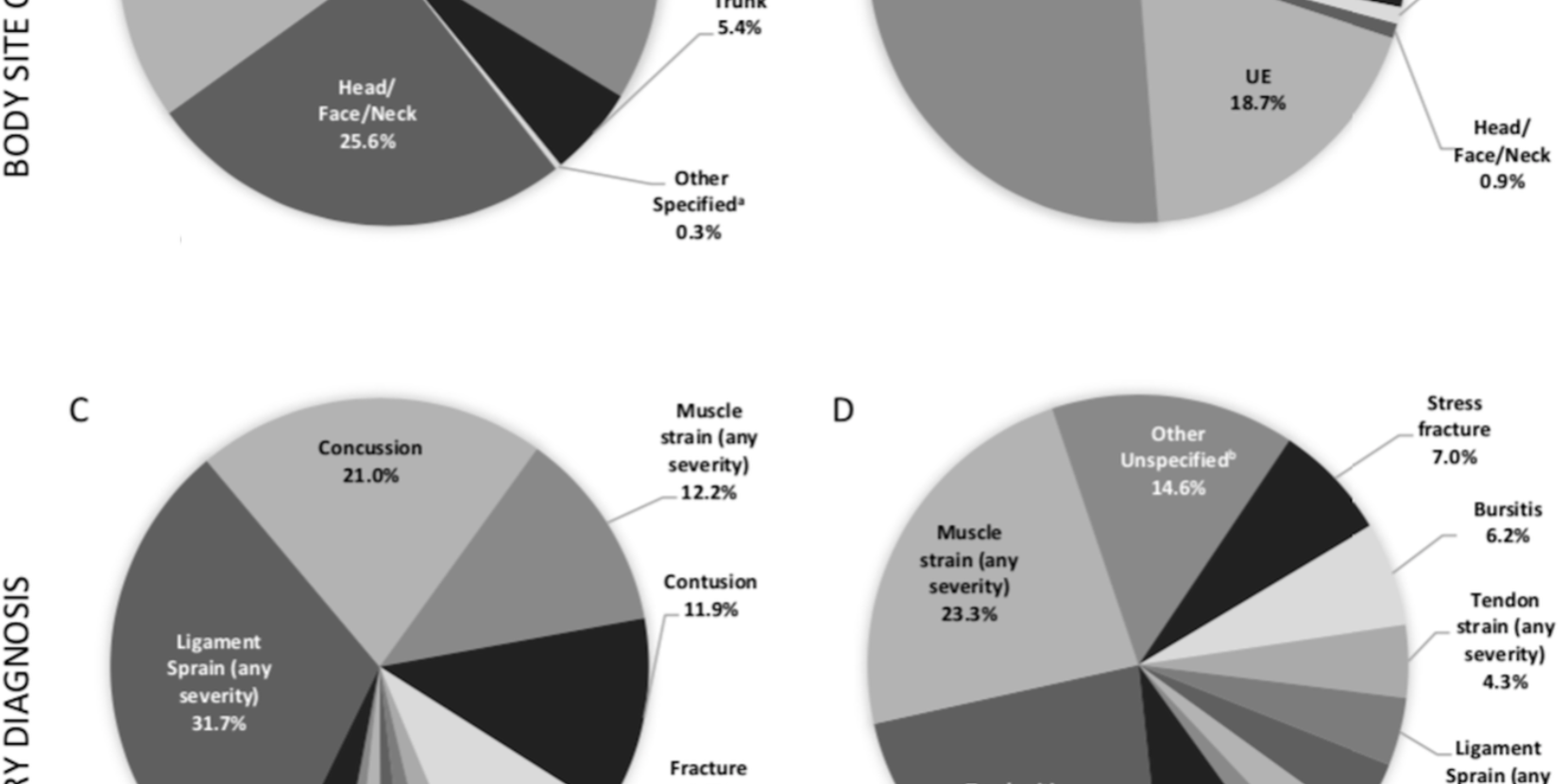
The graph above from high school sports data shows that overuse injuries, while lower in overall incidence, tend to cluster in the lower extremities among athletes. (SpringerLink) This is consistent with what we see in practice — Achilles, patellar tendon, shin, hip, knee structures are often the first to break down under high-volume load.
A more recent, large 2024 study, “Differences in Overuse Injuries in Gender‑Comparable Sports”, offers extra insight:
- The authors estimated ~908,000 overuse injuries in U.S. high school sports during 2006–2019. (PubMed)
- Girls had higher overuse injury rates in soccer (IRR 1.37), basketball (IRR 1.82), and baseball/softball (IRR 1.21) compared to boys. (Read by QxMD)
- Most overuse injuries in soccer and basketball (for both genders) localized to the lower extremity (e.g., 90.0% of girls’ soccer overuse injuries in lower limbs) (National Athletic Trainers’ Association)
- Overuse injuries occurred more often during practice than competition, highlighting that repetitive, unrelenting load (rather than acute spikes) is a key driver. (Meridian)
From a sports physical therapy lens, these data suggest:
- Load management is essential — particularly in phases of increased training volume or intensity (preseason, post-offseason ramp up)
- Monitoring overuse risk in lower extremity structures is prudent, especially for athletes with high repetition (running, jumping, cutting)
- Gender-specific considerations matter — a higher baseline overuse rate in girls means therapists should tailor preventive strategies (strengthening, flexibility, movement patterns) accordingly
Conclusion & Takeaway for Athletes
- The included graphs substantiate what clinicians often see: overuse injuries concentrate in lower limbs and rise with training volume.
- Soreness is typically benign; pain is a red flag. Respect the signs. Do not wait to get evaluated by a trained medical professional, as it could prevent serious injury and get you back on the field or court faster.
- In sports rehab, early rest, load adjustment, strength balance, and biomechanical coaching can prevent minor discomfort from becoming chronic injury.
- Use research data (like the high school injury epidemiology graphs and overuse injury gender study) to guide when to push, when to rest, and when to seek professional evaluation. Remember that everyone is unique, and the recovery timeline can vary.
If you need answers or a tailored sports medicine plan, contact us today. We offer free injury screening and full scale evaluations and treatment plans.