

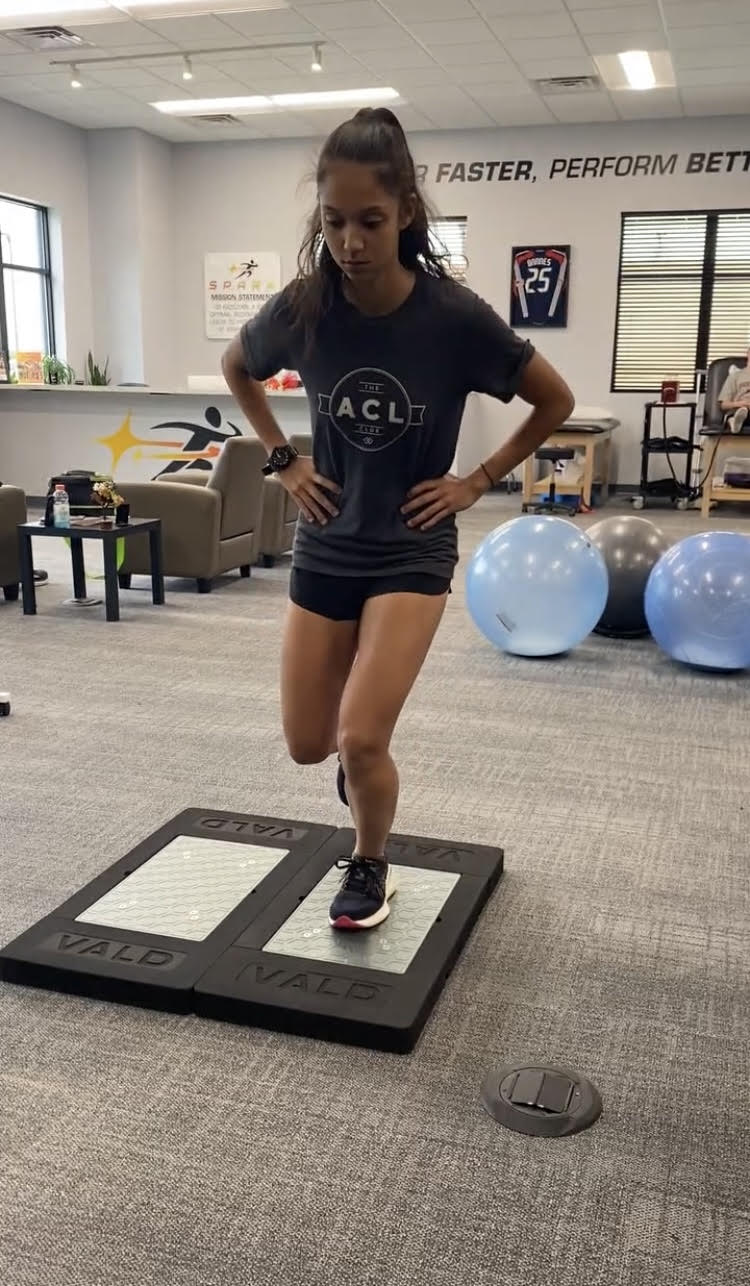
In outpatient sports physical therapy, safely guiding athletes back to sport is both an art and a science. The incorporation of VALD ForceDecks (force plates) empowers clinicians with the precision and objectivity needed to elevate return-to-sport (RTS) decision-making.
Objective Data for Confident Decisions
Traditional RTS assessments have relied heavily on subjective observations, time-based milestones, or visual movement analysis. These methods, while valuable, often overlook subtle yet critical deficits in force production, limb asymmetries, and neuromuscular control. VALD ForceDecks, offering real-time, quantifiable metrics such as rate of force development, peak force, limb symmetry, and landing mechanics, enable clinicians to make evidence-informed decisions with greater confidence. Returning too soon back to sport (even when cleared by the physician) without data to support could increase re-injury risk.
Research Supporting Force Plate Use in ACL RTS Testing
A recent systematic review and meta-analysis (published within the last three years) investigated the discriminative and responsive force plate parameters in individuals post-ACL reconstruction—specifically during countermovement and drop jumps. The study highlighted that parameters like jump height (in single and double-leg countermovement jumps) and normalized peak vertical ground reaction force (vGRF) during drop jumps significantly distinguish individuals after ACL surgery from healthy controls. These metrics are especially valuable in guiding RTS assessments and tailoring rehab interventions post-ACLR (PMC).
Versatility Across Injuries and Movements
Whether working with athletes after ACL reconstruction, Achilles repair, muscle strains or ankle sprains, VALD force plates support a wide array of functional tests—vertical jumps, isometric pulls, countermovement jumps (CMJs), and drop jumps. This versatility allows therapists to design sport and injury-specific protocols, ensuring assessments reflect real-world demands.
Enhancing Patient Engagement and Confidence
Providing athletes with clear, visual performance data fosters motivation, reinforces adherence to rehabilitation protocols, and eases anxiety around readiness—boosting both trust and compliance with the rehab plan. In addition, this info can be helpful to provide to coaches, parents, athletic trainers and doctors to build a safe and realistic timeline for return to play.
Integrating VALD technology underscores our commitment to cutting-edge, evidence-based care. As an elite sports rehab center, we strive to adopt objective RTS testing in order to serve performance-driven athletes and deliver superior outcomes.
Relevant Patient Populations and Conditions
- Muscle strains
- Lower body fractures
- Meniscus, ligament, tendon and labral repair
- Overuse and stress injuries
- Chronic pain or asymmetry
In summary, return-to-sport decisions require more than intuition—they demand precision. By leveraging VALD ForceDecks, clinicians can harness objective measures—like those validated in recent research on ACL rehabilitation—to inform safer, stronger RTS outcomes. Click here for more info on VALD ForceDecks.